
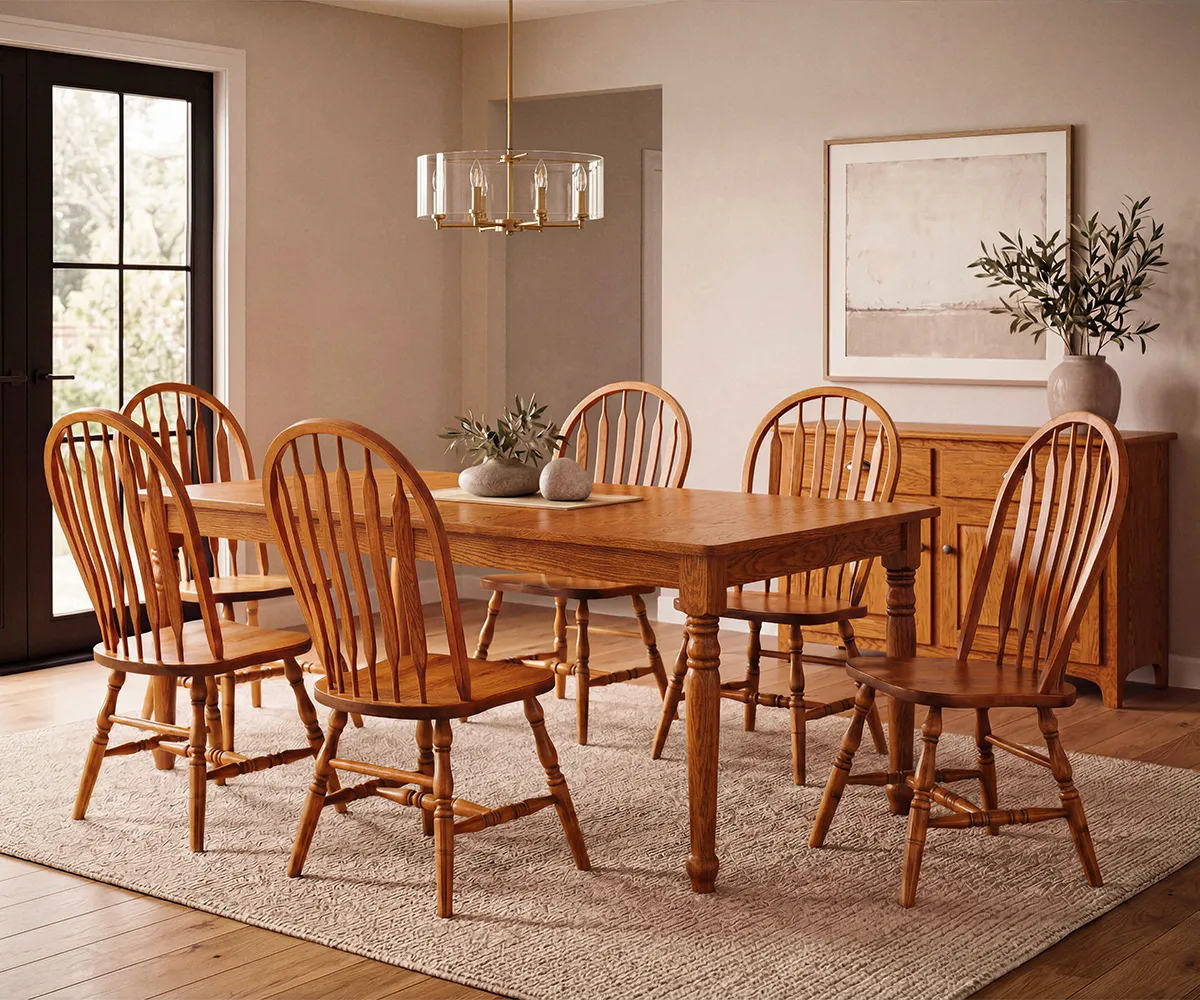
If you’ve recently visited a furniture store, you might have heard the phrase “solid wood.” It sounds better than the alternatives, but it also costs more, which raises a fair question: “Is solid wood furniture really better, or is it just a nicer label?”
At Amish Furniture of Bristol, customers ask us this question most often. The honest answer depends on what you want the piece to do for you over the next few decades.
This guide compares solid wood against the common alternatives so you can decide for yourself.
Understanding Solid Wood Furniture
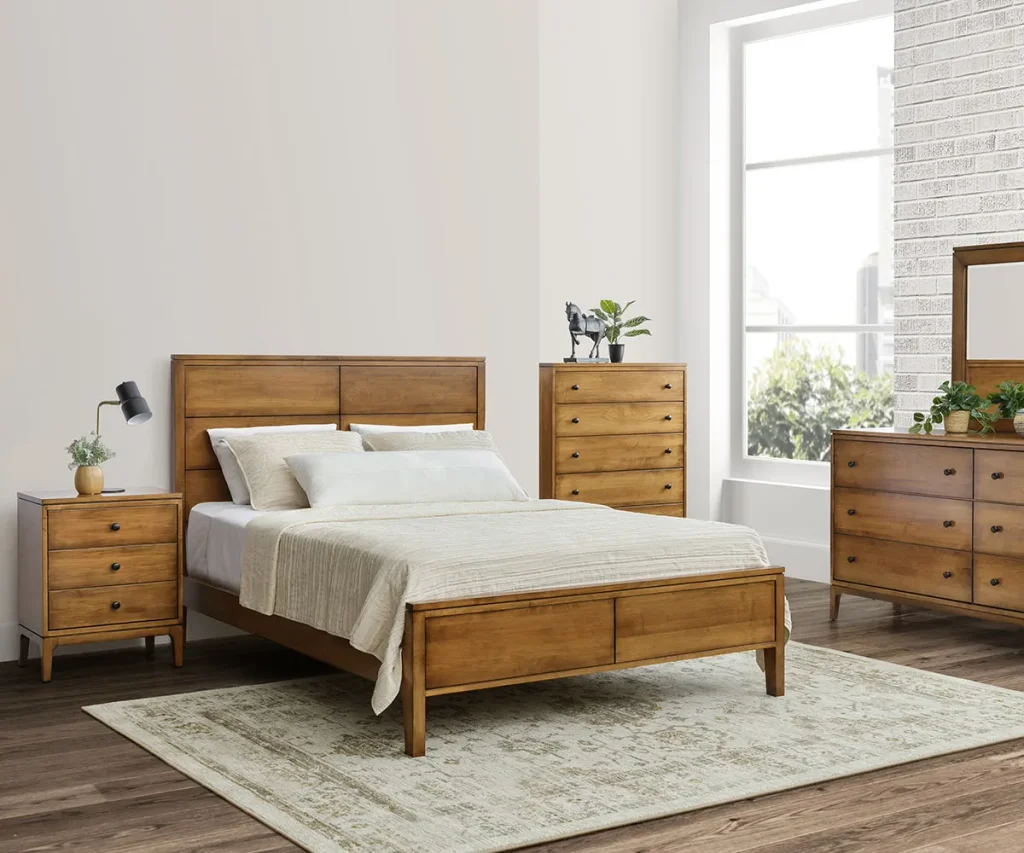
Before you can compare materials, it helps to know what you are buying. The term gets used loosely, so here is everything you need to understand:
What Defines Solid Wood?
Solid wood means every part of the piece is cut from real lumber, with the grain running continuously through the thickness. No particleboard core hides beneath a printed surface.
You can usually feel the difference before you see it. Solid pieces are noticeably heavier because natural wood is denser, which is a good sign of honest construction.
Types of Solid Wood Furniture
Hardwoods like oak and cherry are the usual choices for furniture that gets daily use, along with maple and walnut. Each carries its own grain pattern and takes stain differently, which is why two pieces in the same color can still look distinct.
Oak brings bold, open grain and holds up to heavy wear, while cherry darkens into a richer tone as it ages. Walnut runs naturally dark, and maple gives you a smoother, more even surface.
Softwoods like pine are lighter and cost less, though they dent more easily. For a dining table or a bed that has to last, hardwood is generally the safer investment.
Custom vs. Handmade Wood Furniture
Both terms overlap, but they are not identical. Handmade wood furniture refers to how a piece is built, usually by a skilled craftsman working with traditional joinery instead of an automated line.
Custom wood furniture is about how much say you have in the design. Our Virtual Design Center lets you choose the wood species and stain before you order so that you can shape a piece around your room. No need to settle for what is in stock.
Comparing Solid Wood with Other Materials
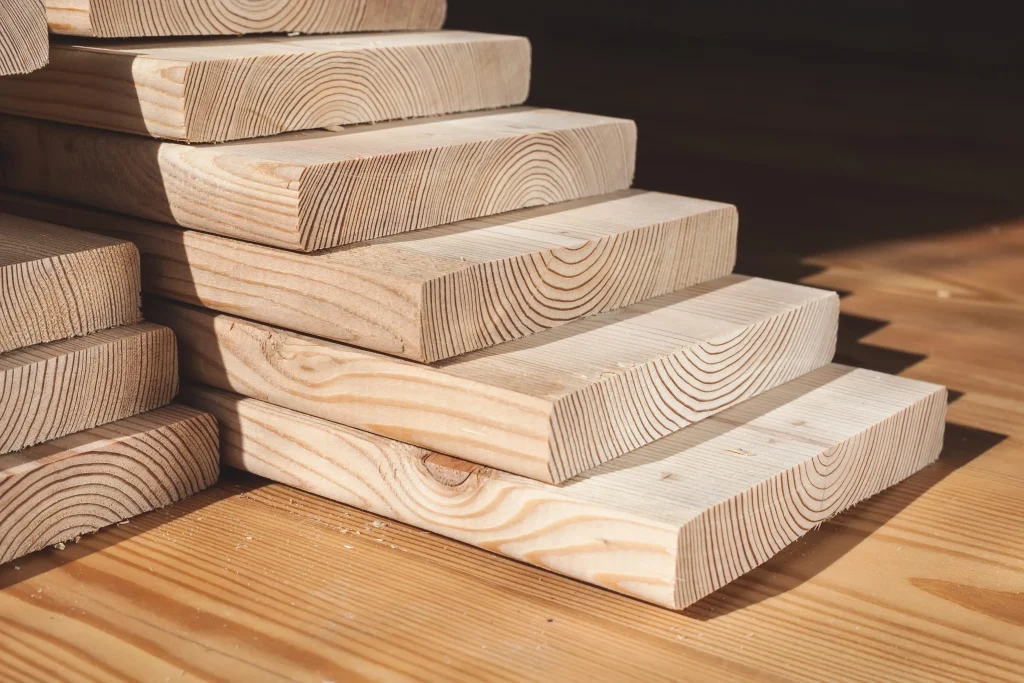
Here is how solid wood and other materials look side by side:
Solid Wood vs. Engineered Wood
Engineered wood is made by pressing wood fibers or layers together with adhesives. It is more affordable and holds its shape well in humid conditions, which is a real advantage in some rooms.
The trade-off shows up over time. Adhesives can break down with moisture exposure, and a damaged core often cannot be repaired, which is the heart of the solid wood vs. engineered wood debate. Solid wood also contains none of the formaldehyde-based adhesives used in some engineered products.
Solid Wood vs. Laminate
Laminate covers a composite core with a printed decorative layer. It is light and inexpensive, and it gives you a perfectly uniform surface across every piece.
Lifespan tells the rest of the story in the solid wood vs. laminate comparison. Quality laminate generally lasts 10 to 15 years, while solid wood can last 50 to 100 years or more with reasonable care. Once laminate chips, the damage is permanent because you can’t sand the surface.
The Debate: Durability, Aesthetics, and Cost
On durability, solid wood clearly wins for pieces used daily. When it comes to looks, it depends on your taste. Real grain gives you depth and character that a printed surface cannot copy.
Cost is the honest sticking point. Solid wood asks more upfront, but a table you keep for 50 years often costs less per year than one you replace every decade. If a piece is temporary or lives in a rental, engineered wood may serve you perfectly well.
The Sustainability Factor
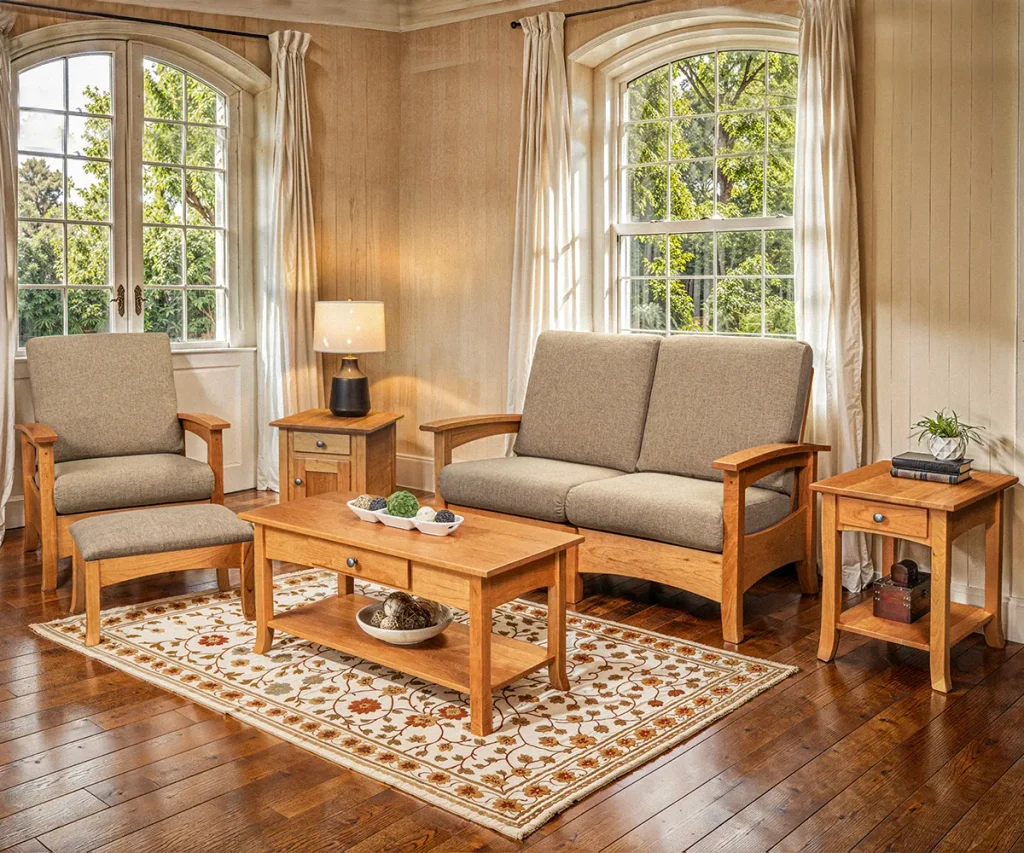
Material choice affects more than your living room. If sustainability is your priority, here is what you can expect:
Sustainable Furniture Materials
Hardwood is renewable when harvested responsibly, making it one of the more sustainable furniture materials available. The numbers back this up. Nearly twice as much hardwood grows in US forests each year as is harvested.
Domestic sourcing helps too. Furniture built in America from American hardwood travels a much shorter distance than imported alternatives, reducing its footprint before it even arrives.
Environmental Impact of Solid Wood Furniture
Longevity is the quiet environmental factor. A piece that lasts 50 years keeps 4 or 5 cheaper replacements out of a landfill. This adds up quickly across a whole house.
Repairability matters just as much. Solid wood can be sanded and refinished many times, while composite cores that swell from water damage usually go straight to the curb.
Maintenance and Care
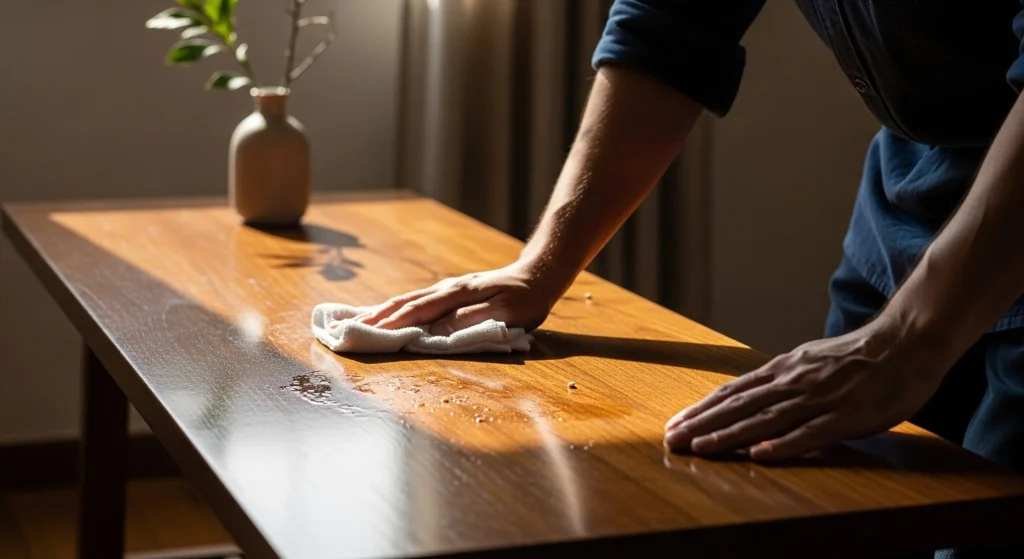
Solid wood needs little maintenance, and the routine is simple with a long-lasting payoff.
Wood Furniture Care Tips
A few habits handle most of the work. These wood furniture care tips will keep your pieces looking right for years:
- Wipe spills quickly with a soft, damp cloth, then dry the surface right away.
- Skip harsh cleaners, since they can strip the finish over time.
- Use a wood-safe polish occasionally to keep the grain looking rich.
- Set down placemats and trivets to guard against heat marks and scratches.
- Keep pieces out of direct sunlight so the finish ages evenly.
- Watch indoor humidity because natural wood expands and contracts with the seasons.
Longevity and Repairability of Solid Wood
When a solid wood surface gets scratched or worn, you can sand it down and refinish it to look new again. That repairability changes how you think about damage. A ring left by a wet glass is a minor fix on solid wood, while the same mark on a laminate top is usually permanent.
Is Solid Wood Worth It?
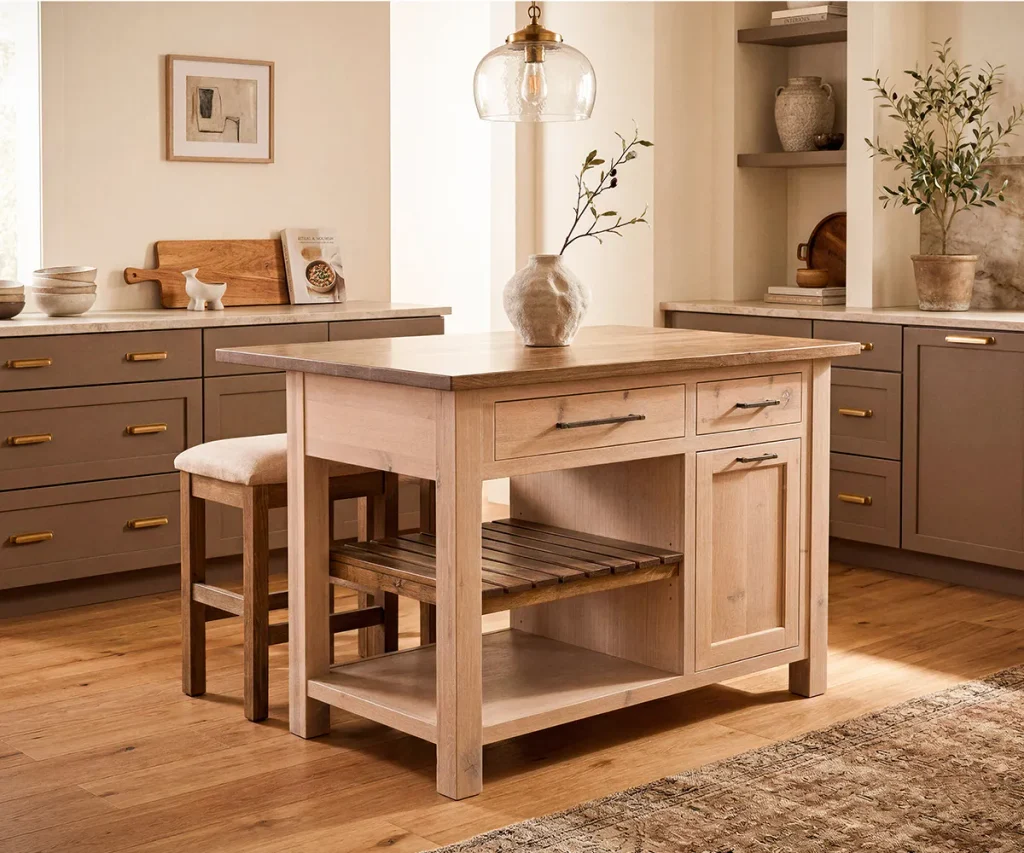
So, is solid wood furniture really better? For pieces you plan to keep, yes, because it lasts longer, repairs easily, and holds its value in a way composite materials cannot.
However, it is not the right answer for every situation. If you need something inexpensive for a temporary space, engineered wood does its job well.
For everything else, the value shows up over years. A well-built hardwood piece is one you buy once and pass down.
If you are ready to see the difference in person, visit our showroom in Bristol or explore our custom furniture options to design something built around your home. Get in touch, and we will help you choose the wood and finish that fit the way you live.